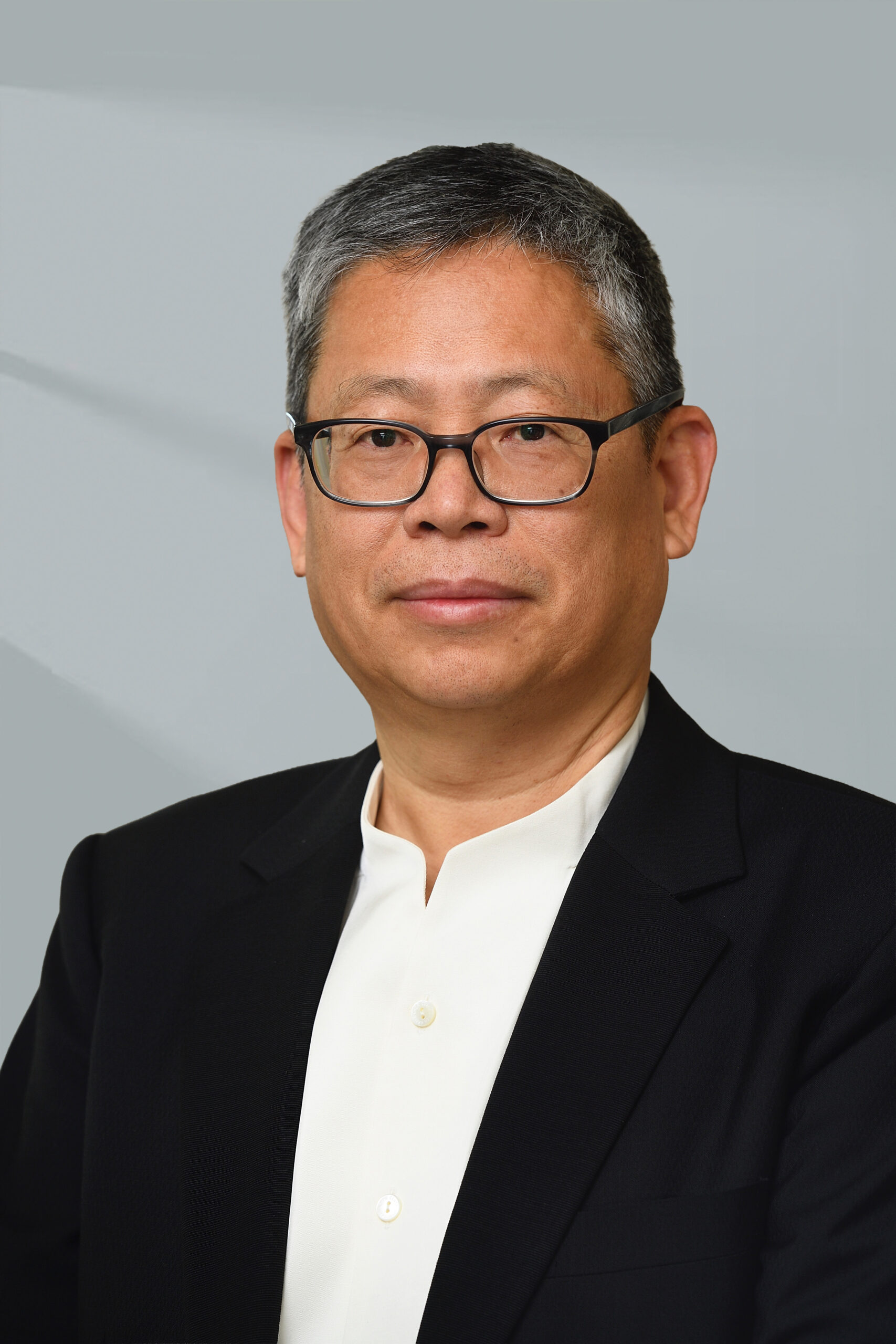
Frontiers in Nanotechnology Seminar Series presents, 2026 IIN Trailblazer Award winner Younan Xia
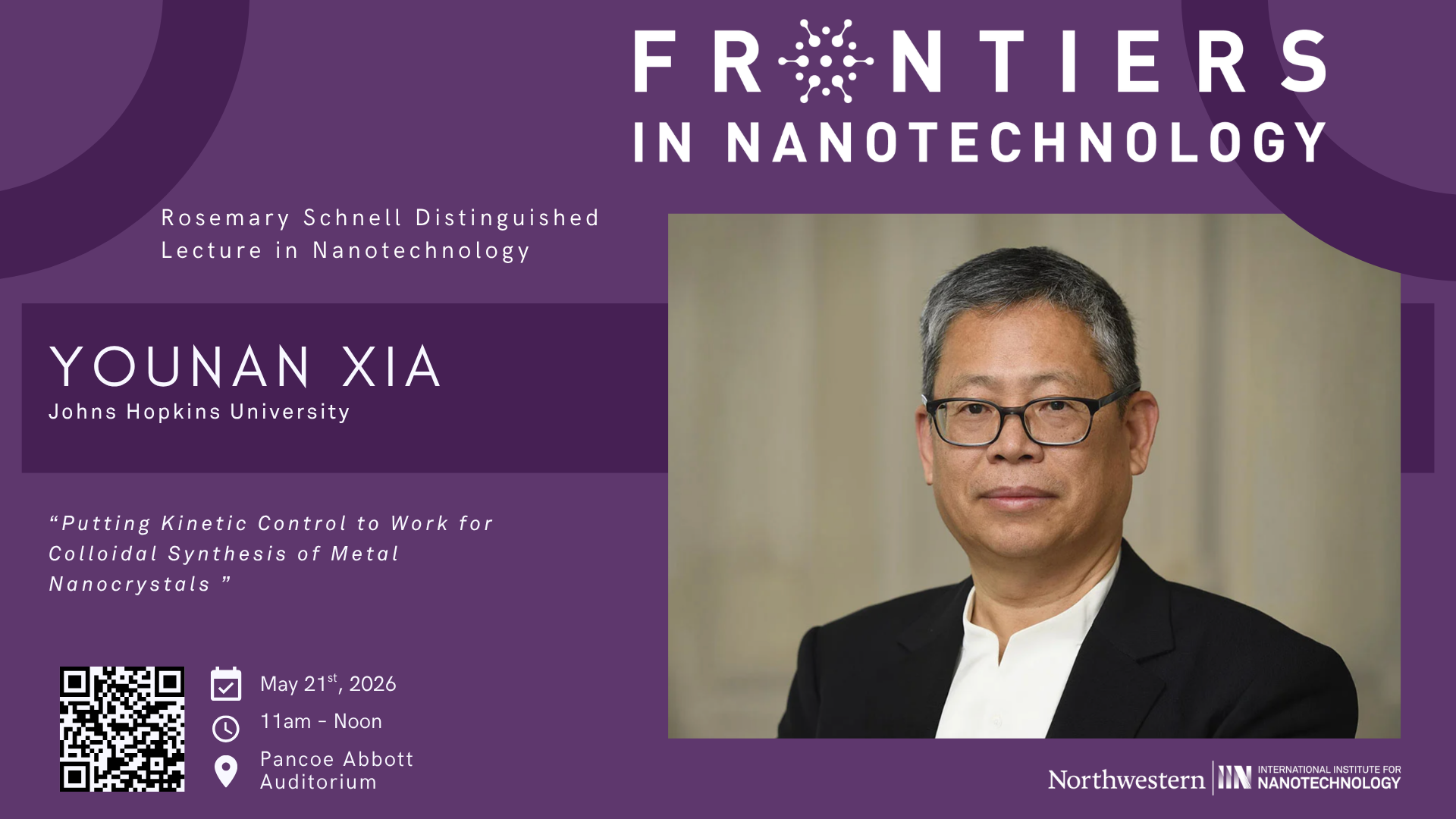
“Putting Kinetic Control to Work for Colloidal Synthesis of Metal Nanocrystals”
Recent studies suggest that the reduction kinetics play an essential role in determining the outcome of a colloidal synthesis of metal nanocrystals. The reduction kinetics not only control the internal defect structure, including single-crystal, singly-twinned, multiply-twinned, and stacking-fault-lined, of a seed formed in the nucleation step but also dictate the growth pattern (symmetric vs. asymmetric) or mode (island vs. layer-by-layer) of the seed in the following steps. In this talk, I will start with an introduction to our recent success in quantifying the kinetic parameters, including rate constants and activation energies, for a number of systems and then illustrate how this knowledge can be applied to deepen our understanding of the nucleation and growth processes, moving toward the ultimate goal of achieving a quantitative and deterministic control over the synthesis. The quantitative knob based on reduction rate has enabled us to precisely and reproducibly tailor the properties of colloidal metal nanocrystals for a broad range of applications in photonics, catalysis, fuel cell technology, imaging, and biomedicine.
Get to know Younan
Dr. Younan Xia is a Bloomberg Distinguished Professor at Johns Hopkins University, with equally split appointments in the Department of Materials Science and Engineering and the Department of Biomedical Engineering. He received a B.S. degree in chemical physics from the University of Science and Technology of China (USTC) in 1987, M.S. degree in chemistry from the University of Pennsylvania (with Alan G. MacDiarmid) in 1993, and Ph.D. degree in physical chemistry from Harvard University (with George M. Whitesides) in 1996. His group has invented numerous nanomaterials with well-controlled properties for applications in plasmonics, electronics, display, catalysis, energy conversion, controlled release, drug delivery, nanomedicine, and regenerative medicine. Notably, the silver nanowires invented by his group have been commercialized for the manufacturing of flexible, transparent, and conductive coatings key to applications such as touchscreen displays, flexible electronics, and photovoltaics. His technology on the alignment of electrospun nanofibers has been commercially used to develop multiple clinical products for regenerative medicine, including those for the management of surgical and trauma wounds.
Xia has co-authored over 920 publications in peer-reviewed journals, with a total of more than 220,000 citations and an h-index of 224. He has been named a Top 10 Chemist and Materials Scientist based on the citation data. He has received many prestigious awards, including election to the National Academy of Engineering (NAE, 2026), election to the National Academy of Inventors (NAI, 2025), Linus Pauling Medal (2024), ACS Award for Creative Invention (2023), MRS Medal (2017), ACS Award in the Chemistry of Materials (2013), NIH Director’s Pioneer Award (2006), and NSF CAREER Award (2000). More information can be found at http://www.nanocages.com.
Frontiers in Nanotechnology Seminar Series presents, 2026 IIN Trailblazer Award winner Younan Xia
- This event has passed.