International Institute for Nanotechnology
  • About
    About
    • About Us
    • Facilities
    • Contact Us
    • Employment
    • Partners
    • People
  • Research
    Research
    • Centers
    • Economic Impact
  • Education
    Education
    • Academic Programs
    • Educational Videos
    • Events & Outreach
    • Kabiller Prize
    • Nanoscape Podcast
    • Undergraduate Education
  • News
  • Giving
  • Events
    Events
    • Event Calendar
    • 2026 IIN Rosemary Schnell Symposium
    • May 21 - Frontiers in Nanotechnology Seminar Series presents, 2026 IIN Trailblazer Award winner Younan Xia
  • Nano 101
    Nano 101
    • What is Nanotechnology?
    • Glossary of Terms in Nanotechnology
    • History of Nanotechnology
    • Nano Applications
Search
nav

NU Nano Scientist Program

The NU Nano Scientist Program helps first-year students find their way into research early and is designed for those interested in chemistry, materials, energy, sustainability, nanotechnology, and hands-on lab work.

Through seminars, mentorship, research group matching, and a guaranteed paid summer research experience, students begin building skills they can use in labs, fellowships, advanced coursework, and future research opportunities..

NU Nano Scientist is especially interested in bringing in students from underrepresented groups and students who may not otherwise see research as an immediate option.

The NU Nano Scientist program is administered by the International Institute for Nanotechnology (IIN) and the Department of Chemistry and supported by the IIN, Chemistry, and Materials Science and Engineering.

Interested in joining NU Nano Scientist?
Email Veronica Berns, PhD, at veronica.berns@northwestern.edu by Aug. 1 to indicate interest. Students should also rank Science and The Scientist as their first-choice seminar during first-year seminar selection.

Start early. Build an advantage.

The earlier students begin research, the more time they have to build on it. Students who begin in their first year have more time to build lab skills, develop mentor relationships, pursue fellowships, contribute to projects, present their work, and prepare for graduate study.

In its first three years, NU Nano Scientist has served 45 students, and 65 percent have continued working in labs after their first year.

Students who use NU Nano Scientist as the start of a four-year research pathway can graduate with a level of experience that gives them a significant advantage over peers from other universities when applying to graduate programs, fellowships, and research opportunities.


How to Indicate Interest 

Interested students should complete two steps:

  • Email Dr. Veronica Berns (veronica.berns@northwestern.edu) by Aug. 1 to indicate interest in the NU Nano Scientist Program.
  • Rank Science and The Scientist as your first-choice seminar during the first-year seminar selection process.

Arch Scholars are invited to learn more about this opportunity as part of their first-year research pathway options.

Students are selected based on their interest and experience. The program is looking for WCAS students who are excited about chemistry, nanomaterials, nanotechnology, and hands-on research.

At a Glance

  • Cohort size: 15 students
  • Who it is for: Incoming first-year students in the Weinberg College of Arts and Sciences
  • Best fit: Students excited about chemistry, nanomaterials, nanotechnology, materials, energy, sustainability, and lab research
  • Experience needed: No prior research experience required
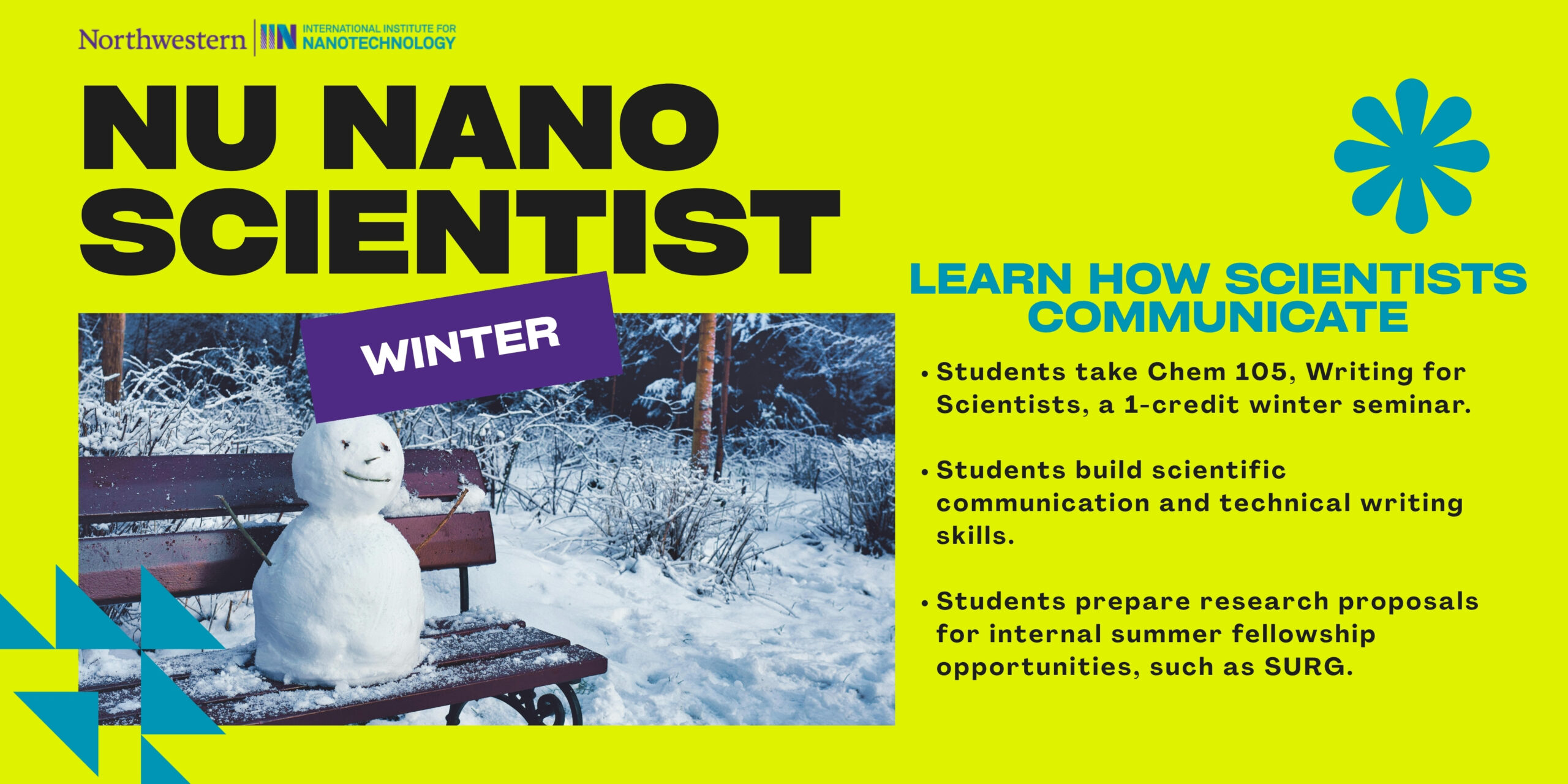
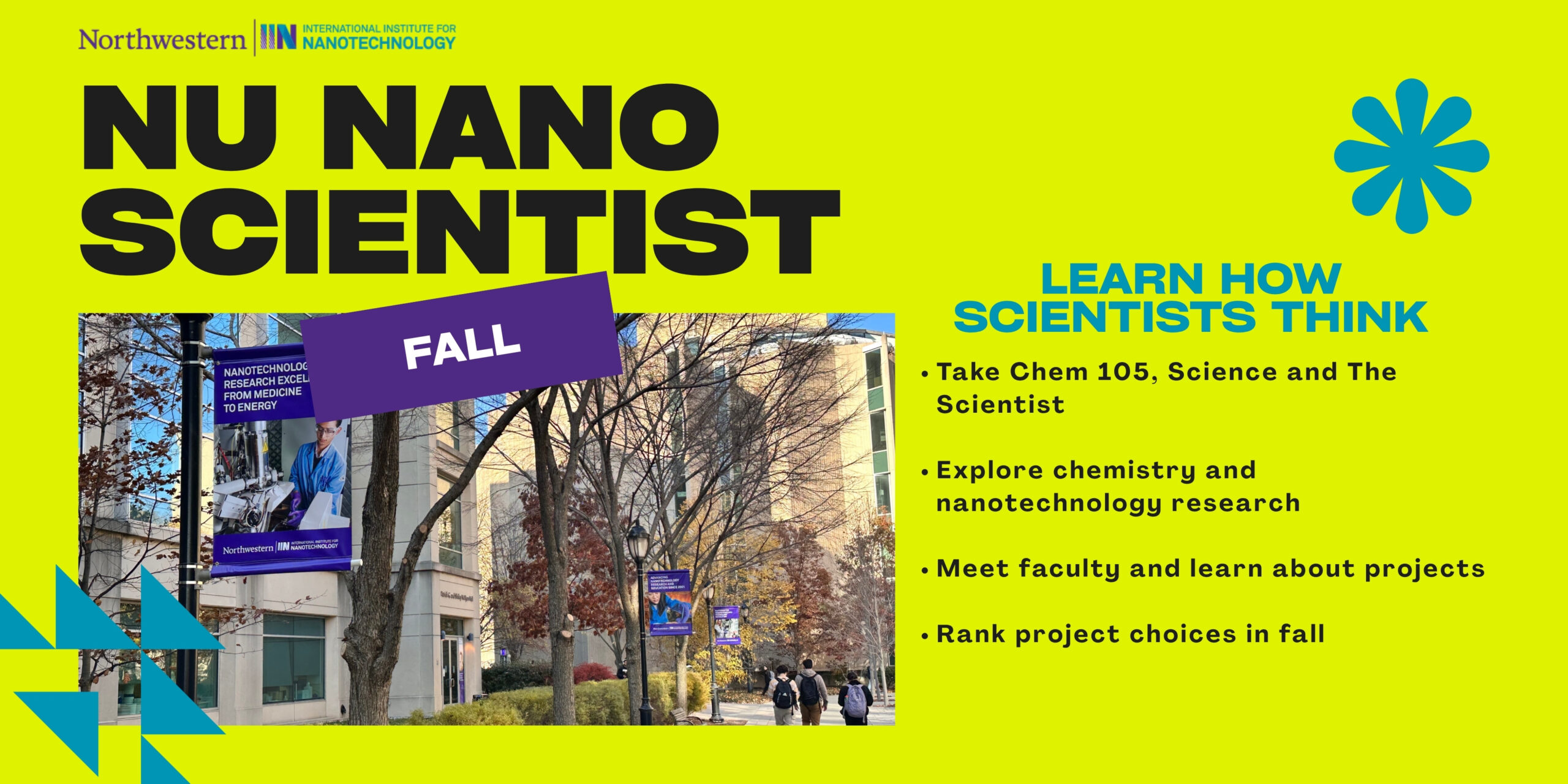
  • Courses: Fall Chem 105, Science and The Scientist; winter Chem 105, Writing for Scientists
  • Credit: Each seminar is a 1-credit, letter-graded course
  • Course load: Each seminar counts as one of a student’s four WCAS courses during the fall and winter quarters
  • Research matching: Students learn about projects, rank their choices, and are matched partway through fall quarter
  • Summer research: Guaranteed
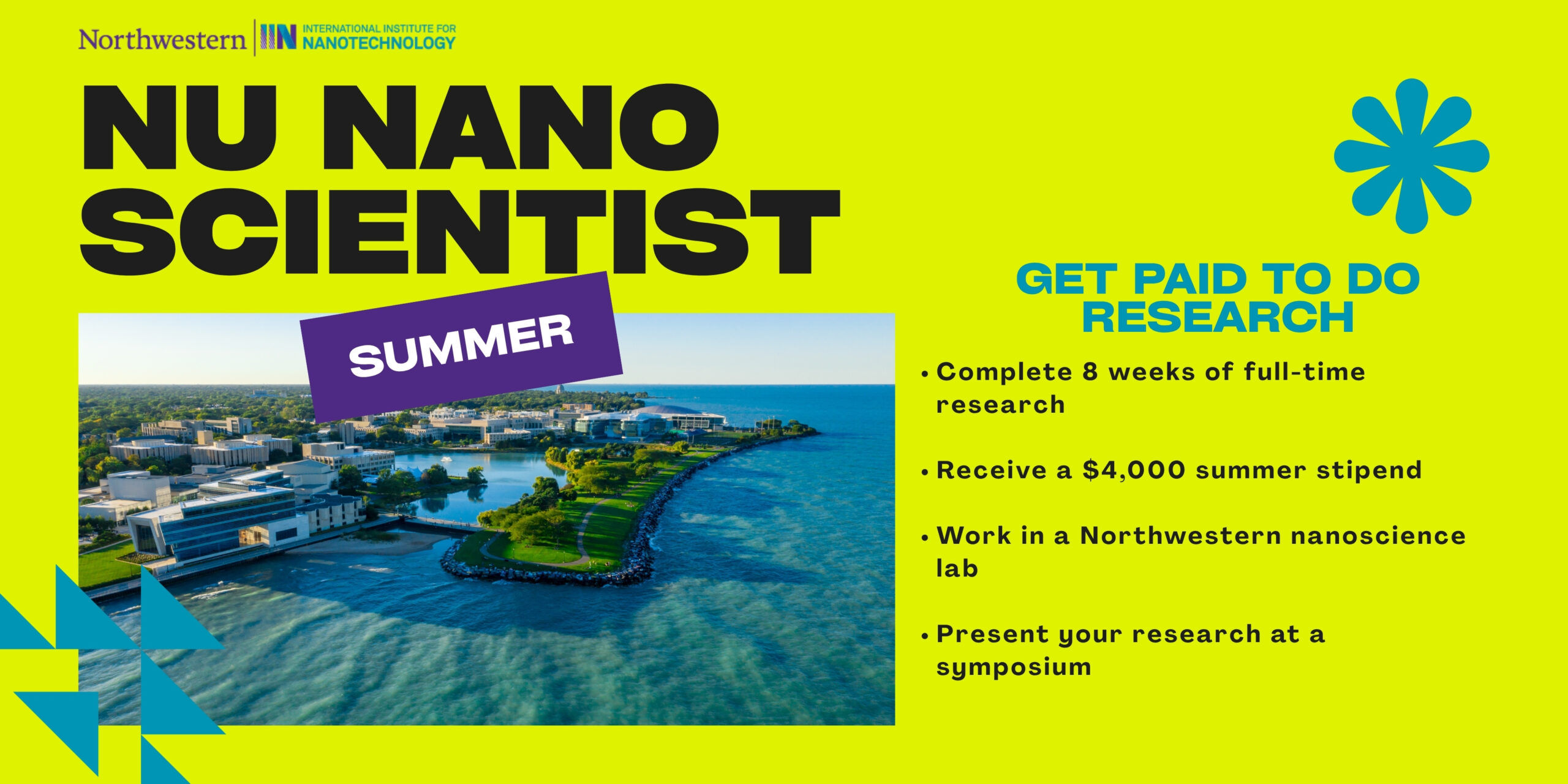
  • Summer stipend: $4,000 to help with living expenses
  • Interest deadline: Email Dr. Veronica Berns by Aug. 1
  • Program history: 45 students over the first three years
  • Research continuation: 65 percent have continued working in labs after year one

Who should select this program?

This program is for students who want to work in a lab and explore how chemistry and materials can solve real problems.

NU Nano Scientist is a strong fit if you are interested in:

  • What materials are made of
  • How chemistry can help solve global challenges
  • Clean energy and climate solutions
  • Sustainability and environmental technologies
  • Catalysts, sensors, quantum dots, polymers, nanolayers, and advanced materials
  • Hands-on research in a laboratory
  • Building toward graduate school or a research-focused career
  • Learning how scientists think, test, revise, and discover

Students interested in biology or medicine are welcome if they are also curious about materials, chemistry, nanotechnology, or hands-on lab research. However, students who continue in research after their first year can build a strong foundation for fellowships, graduate school, and future research opportunities.

This program may not be the best fit if you are looking only for a general pre-med experience, a biomedical shadowing opportunity, or a seminar with no interest in lab-based research.

Research should be open to more students.

Many students arrive at Northwestern interested in science but unsure how to find a lab, contact a researcher, or get started. NU Nano Scientist gives first-year students a guided way to take that first step.

The program is especially interested in bringing in students from underrepresented groups and students who may not otherwise choose research during their first year. No previous lab experience or background in chemistry research is required.


How the program works

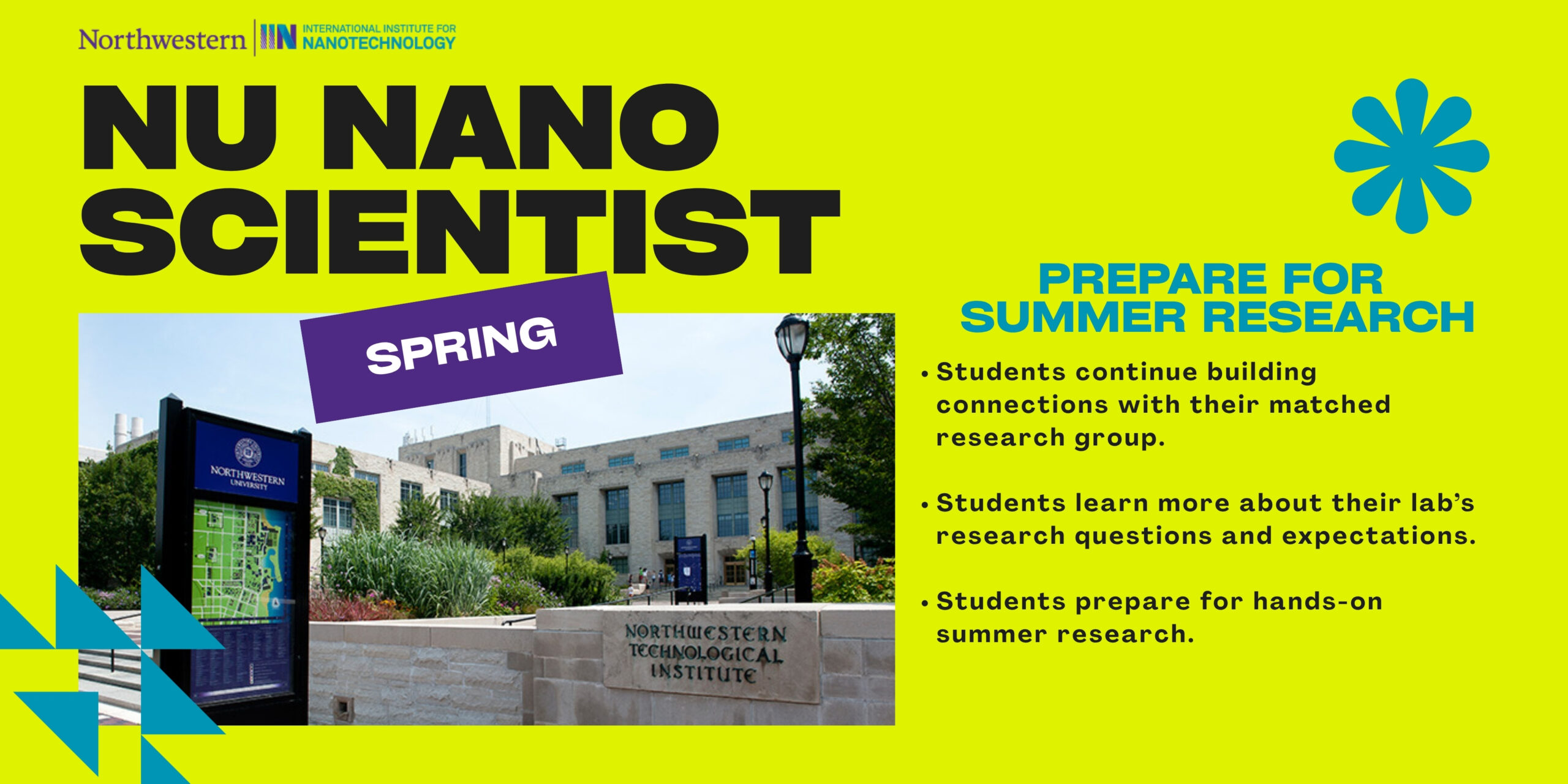
The program follows students across the first year, from fall coursework and research matching to spring lab preparation and summer research.

Partway through fall quarter, students learn about available research projects through faculty presentations and Q&A sessions. Students then rank their preferred projects, and the program works to match each student as closely as possible with one of their top choices.

Students complete approximately eight weeks of full-time summer research and receive a NU Nano Scientist Summer Undergraduate Research Fellowship, including a $4,000 stipend to help with living expenses. At the end of the summer, students complete a short research report and present their work at a symposium with fellow NU Nano Scientist trainees.

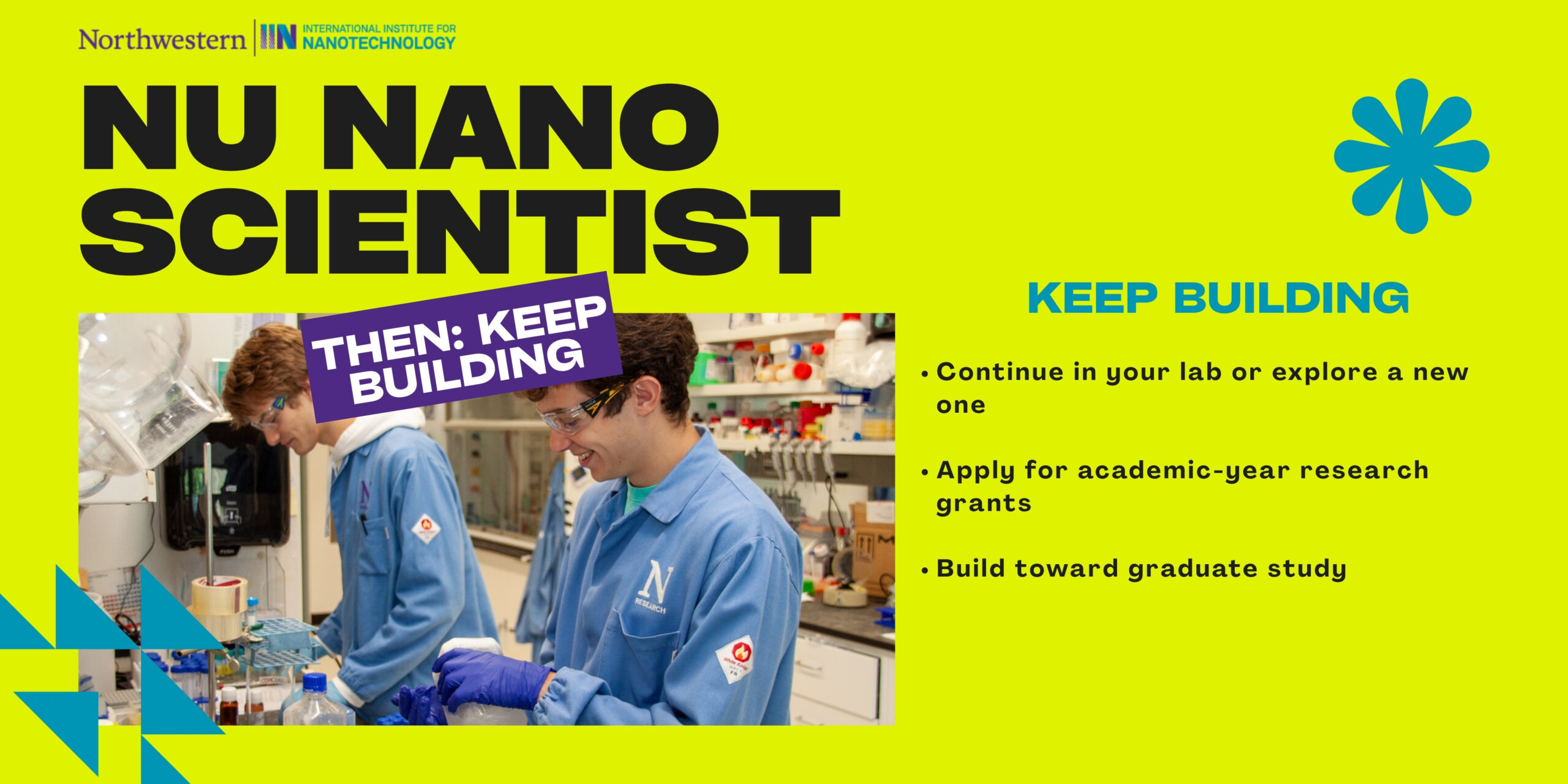
Students who continue in research after their first year can build a strong foundation for graduate study, fellowships, and future research opportunities.


What kind of research could you do?

NU Nano Scientist connects students with faculty working across chemistry, materials science, energy, sustainability, catalysis, optics, quantum science, and nanotechnology.

Students may explore research areas such as:

  • Nanomaterials and nanotechnology
  • Materials for energy and sustainability
  • Catalysis and chemical reactions
  • Quantum dots and optical materials
  • Polymers, nanolayers, and advanced materials
  • Computational and theoretical nanoscience
  • Technologies connected to sensing, climate, and clean energy

These projects give students a chance to explore real research questions in nanoscience and technology, from materials that interact with light to catalysts, quantum materials, energy systems, and next-generation sensing technologies.


Frequently asked questions

Q) Who is eligible for NU Nano Scientist?
A) The program is open to incoming first-year students in the Weinberg College of Arts and Sciences.

Q) When should I indicate interest?
A) Interested students should email Dr. Veronica Berns (veronica.berns@northwestern.edu) anytime during the summer and no later than Aug. 1. Students should also rank Science and The Scientist as their first-choice seminar during first-year seminar selection.

Q) Do I need previous research experience?
A) No. The program is designed to welcome students at all experience levels. Students are encouraged to participate with or without a background in chemistry or research.

Q) Do I need to major in chemistry?
A) No. The program is especially relevant for students interested in chemistry, materials, energy, sustainability, nanotechnology, and lab-based STEM research, but it does not require students to commit to a chemistry major.

Q) How are students selected?
A) Students are selected based on their interest and experience. The program is looking for a cohort of students who are excited about chemistry, nanomaterials, nanotechnology, and hands-on research.

Q) When are students matched with research groups?
A) Students are matched partway through fall quarter. They learn about available projects through presentations and Q&A sessions, then rank their choices. The program works to match each student as closely as possible with one of their top choices.

Q) Do these seminars count toward my course load?
A) Yes. Each seminar is a 1-credit, letter-graded course that counts as one of your four WCAS courses during the fall and winter quarters.

Q) What are the courses?
A) Students take Chem 105, Science and The Scientist, in the fall and Chem 105, Writing for Scientists, in the winter.

Q) Is this a pre-med program?
A) No. This is not primarily a pre-med or biomedical research program. Students interested in biology or medicine are welcome if they are also interested in chemistry, materials, nanotechnology, or hands-on lab research.

Q) Is summer research guaranteed?
A) Yes. Students in the cohort are guaranteed a summer research experience.

Q) How much is the stipend?
A) Students receive a $4,000 stipend to help with living expenses.

Q) How long is the summer research experience?
A) The summer research experience is approximately eight weeks and is full-time.

Q) Where do students live during summer research?
A) Students should email Dr. Berns with questions about summer logistics, including housing.

Q) Do I have to commit to research for four years?
A) No. NU Nano Scientist is not a binding four-year commitment. However, students who continue in research after their first year can build a strong foundation for fellowships, graduate school, and future research opportunities.

Q) How many students are selected?
A) The cohort is limited to 15 students.

Q) Is the program competitive?
A) Yes. Because the cohort is small and the summer research experience is guaranteed, students should treat NU Nano Scientist as a selective opportunity. Selection is based on student interest and experience. The program is looking for a cohort of WCAS students who are excited about chemistry, nanomaterials, and nanotechnology.

Q) What happens after the summer?
A) Students may continue research in their current lab or explore a new lab. They are also encouraged to apply for academic-year undergraduate research grants through the Office of Undergraduate Research.

Q) Who should I contact with questions?
A) Students interested in the program should email Veronica Berns, PhD, associate professor of instruction in the Department of Chemistry, at veronica.berns@northwestern.edu.
Ready to indicate interest?

Email Veronica Berns, PhD, at veronica.berns@northwestern.edu by Aug. 1 to indicate interest. Students should also rank Science and The Scientist as their first-choice seminar during first-year seminar selection.


International Institute for Nanotechnology

International Institute for Nanotechnology

2145 Sheridan Rd, Tech K111
Evanston, IL 60208

  • About
  • Research
  • News
  • Contact Us

©2026 International Institute for Nanotechnology Privacy PolicyTerms of ServiceSite MapBuilt By Clique Studios