News
Northwestern Researchers Overturn Decades-Old Assumptions About the Structure of One of Science’s Most Widely Used Hydrogels
March 11, 2026
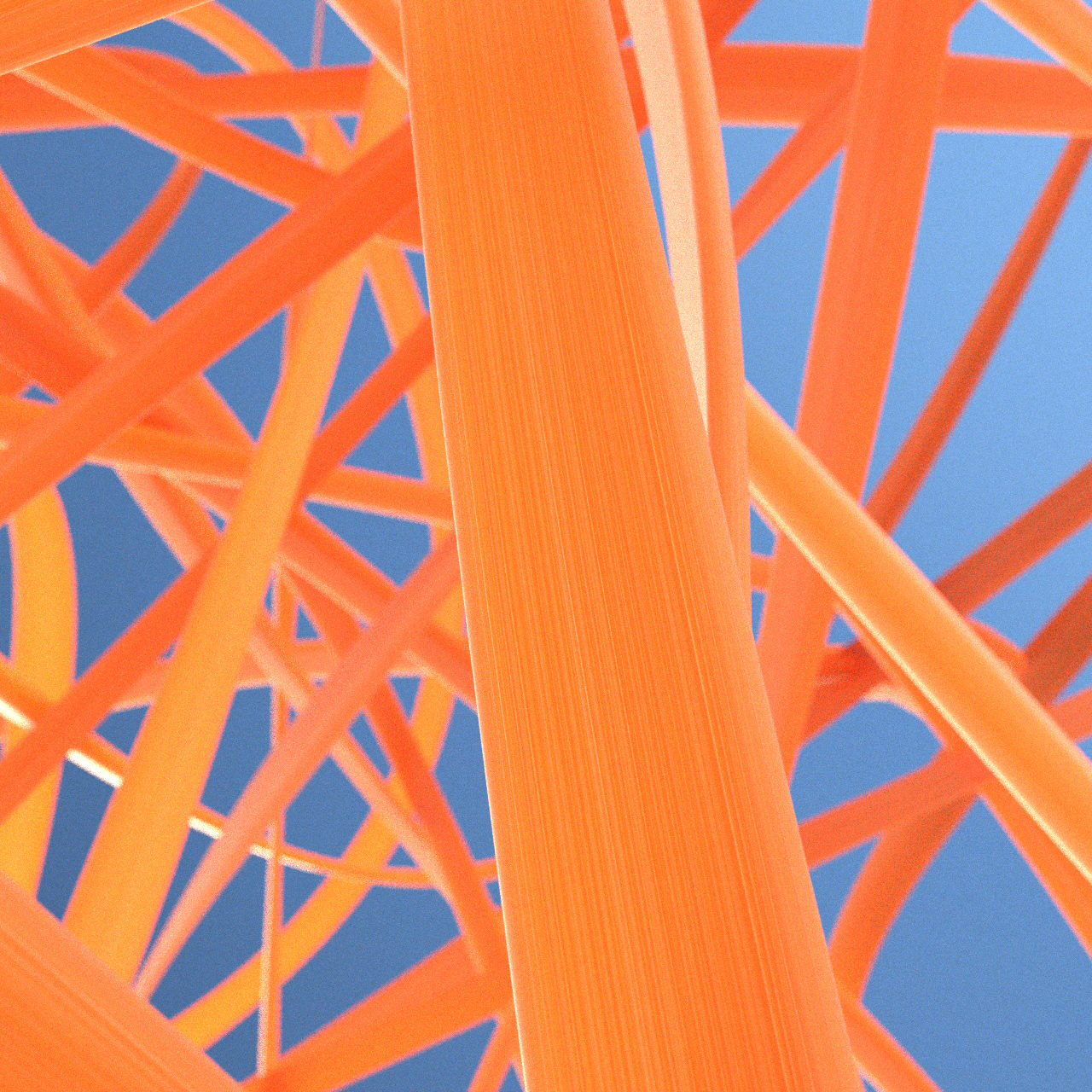
Polysaccharide hydrogels are formed from hierarchically assembled, rigid polymer fibers, observed in the liquid, hydrated state using advanced TEM imaging.
Methylcellulose hydrogels are hierarchical structures with greater rigidity than previously thought, overturning structure/function models relied on for decades.
Hydrogels have been a cornerstone of biomedicine for over 70 years, used in everything from drug-delivery systems and contact lenses, to tissue-engineering scaffolds. For decades, scientists have worked to understand how these materials work. A new study from Northwestern University suggests that unanswered questions remain.
In a study led by Northwestern University chemist Nathan C. Gianneschi, researchers report a way to observe hydrogel structure while the hydrogel remains fully solvated. The approach reveals that methylcellulose, one of the most widely used hydrogel-forming materials in biomedical research and consumer products, organizes itself into a structural architecture that standard characterization techniques have not been able to visualize. The material is orders of magnitude more rigid than believed and theoretical models can be used together with this new information to better predict its mechanical behavior.
The study was published today in Nature Materials.
Using a technique called variable temperature liquid cell transmission electron microscopy (VT-LCTEM), along with advanced techniques such as Small and Ultra Small Angle Neutron Scattering (SANS and USANS) at ANSTO, Australia, the team imaged a methylcellulose hydrogel in its fully solvated state, observing its assembly in real time with minimal preparative disruption. What they found upended the structural model that has guided the field since a landmark 2013 study. The individual fibrils that form the gel do not remain a loosely tangled network of flexible strands, like a bowl of boiled spaghetti. Instead, they bundle into much larger, substantially stiffer structures, and it is those bundles, not the fibrils, that dictate how strong the gel is.
“We had hypothesized that if we imaged hydrogels in their liquid state with high resolution TEM, we would learn new things about their structures, not possible when they are dried or diluted for conventional imaging,” said Gianneschi, who led the study. “It was one thing to speculate about it and another to really see these materials form under those conditions. The initial images really surprised us and excited us to dig deeper into what could be a generalizable approach to elucidating structure and function for hydrogel materials.”
Gianneschi is the Jacob & Rosaline Cohn Professor of Chemistry, Materials Science & Engineering, Biomedical Engineering and Pharmacology at Northwestern’s Weinberg College of Arts and Sciences and serves on the Steering Committee of Northwestern’s International Institute for Nanotechnology.
A problem hiding in the method
Hydrogels depend on water for their structure and function. Standard electron microscopy techniques require removing that water before a sample can be examined, which inevitably disrupts the structure you are trying to study. The field has developed workarounds including the use of cryogenic transmission electron microscopy (cryo-TEM), thinning the gel, then rapidly freezing them prior to imaging to preserve their structure. Prior studies have used this approach which results in methylcellulose appearing as a loose, randomly entangled network of flexible nanoscale fibrils.
The architecture was widely accepted, but is limited in providing a physical understanding of properties. Attempts to use such structural parameters to predict the stiffness of a methylcellulose gel at a given concentration yielded results that differed from experimental measurements. A handful of scattering studies over the years hinted at structural features larger than what cryo-TEM described, but no available technique could image the gel across the relevant range of length scales to substantiate these results without disturbing it first.
Seeing it whole, for the first time
VT-LCTEM solved that problem by keeping the sample in solution throughout the entire imaging process. Developed and pioneered by the Gianneschi laboratory for imaging soft matter and leveraging Northwestern’s NUANCE nanomaterials characterization Center facilities and expert personnel, the approach seals a nanoliter-scale volume of hydrogel in its native state and allows precise temperature control in real time. The team could watch methylcellulose transition into a gel as it actually happened, with no preparative disruption at any stage.
The images showed that the individual fibrils form as expected upon heating, then continue to assemble into bundles measuring 1 to 4 micrometers in diameter. Those bundles are roughly 100 times stiffer than the fibrils they are made of. Image analysis revealed that the bundles have a persistence length, a direct measure of structural rigidity, up to a thousand times greater than what previous studies had reported for the individual fibrils. Every independent method the team then applied, confirmed the same picture: adapted freeze-drying electron microscopy and variable-temperature neutron and light-scattering experiments on bulk samples all pointed to the same hierarchical structure. This was further confirmed by combining reactor based SANS and USANS techniques, which gave multilength scale information spanning from 1 nm to 20 µm length scale.
“Running these samples on the SANS and USANS beamlines across a range of temperatures and observing signals emerging at the micron length scale at higher temperatures was extremely reassuring. It provided clear evidence for a phenomenon that had previously only been predicted, as earlier SANS and SAXS measurements did not cover the larger q/size range required to detect it. Seeing this behaviour directly in the data was truly exciting,” said A/Prof. Jitendra Mata, Principal Instrument Scientist at ANSTO.
When the persistence length of the bundles, measured directly from the images, is used as the input for the theoretical model rather than the previously determined values for individual fibrils, the model’s predictions align much more closely with experimental data. However, the authors note that further work is needed to fully optimize it. The long-standing gap between structure and function for these materials was not a flaw in the model. It was a consequence of underestimating the extent of the hierarchical structures involved.
“VT-LCTEM has the potential to capture native, solvated structures and is becoming an ever more powerful method. However, correlative methods must always be used to verify what we observe because of confinement and electron beam effects. We were fortunate to have so many expert collaborators involved from across the US and around the world. This including teams at Case Western Reserve University, University of Florida, Argonne National Lab and at ANSTO in Australia, so that we could capture the hydrogels and interpret the results in a multidisciplinary way,” said Gianneschi.
What’s next
The team extended the analysis to two related materials, hydroxypropyl methylcellulose and hydroxypropyl cellulose, finding a similar bundled architecture in the former and a distinct organization in the latter. The variation across materials points to a broader principle: the structural picture of any material that depends on solvation may be incomplete if analyzed without solvent present and without techniques capable of resolving the full range of relevant length scales. The authors suggest methylcellulose may not be the only material whose structural model has been shaped by the limitations of standard preparation methods.
Ongoing work in the Gianneschi laboratory is focused on measuring additional structural parameters of gels directly in the native state, with the goal of building a predictive framework that would allow hydrogels to be designed with more accurately tailored mechanical properties. Methylcellulose alone appears in tissue engineering scaffolds, wound healing, ophthalmology, tissue culture, drug delivery systems, and food products. For a class of material utilized in medicine, biotechnology, and in the food supply for over 70 years, getting the structure right has consequences far beyond a single laboratory finding and could influence how future structures are made, optimized and developed.
The study, “Prediction of Rheological Properties via Structure Elucidation of Solvated Hydrogels,” was supported by the Department of Defense, Army Research Office (W911NF-17-1-0326) and a joint research grant by the National Science Foundation (CHE-MSN 1905270).